










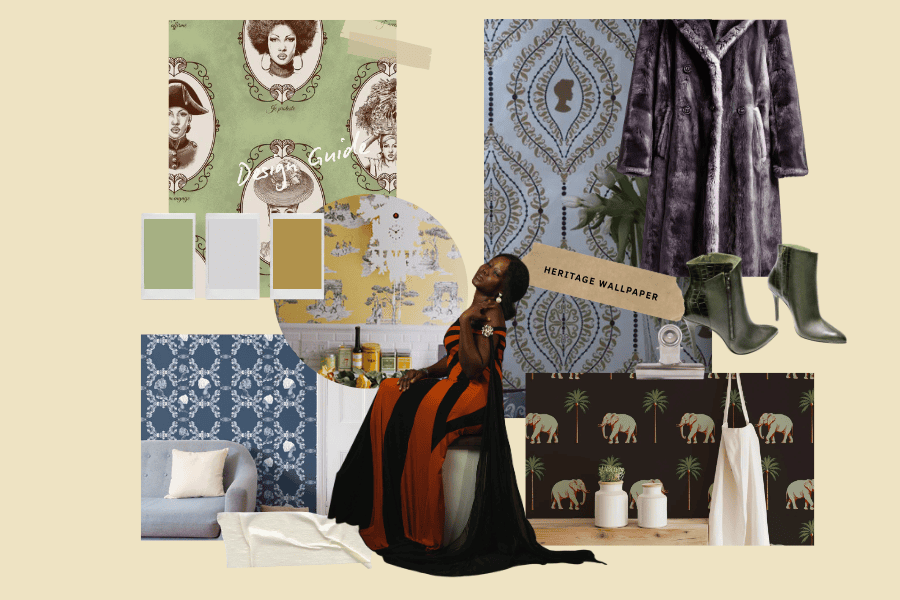
From Sheila Bridges’s museum-collected Harlem Toile to Mitchell Black’s Chicago-made murals and AphroChic’s diaspora-informed patterns, wallpaper is becoming a canvas for identity, history and expressive home-making.
Wallpaper is having a renewed moment, but the most interesting shift is not simply its return to favor. Across contemporary interiors, wallcovering is being treated as immersive interior art: a surface that can envelop a room, direct its mood and make a point of view visible before the furniture is even read.
That expanded role changes what pattern can do. In the work considered here, motifs carry memory, critique, joy, movement and personal history rather than functioning as a neutral backdrop. The story is also about authorship: who gets to revise inherited decorative languages, and how a room can make cultural belonging legible without turning it into a slogan.
The examples that follow move from Sheila Bridges’s reworking of French toile to Mitchell Black’s Chicago-made, made-to-order practice and AphroChic’s connection between home, heritage and global design.
Walls That Tell a Story: Black Designers and Culture-Led Brands Transforming Wallpaper
Sheila Bridges: Rewriting the Toile Canon

Website: https://www.sheilabridges.com/
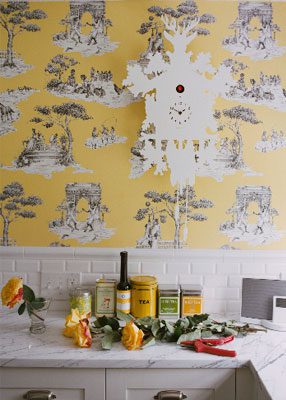
Sheila Bridges’s Harlem Toile de Jouy is the cornerstone of this story. Created first as a wallcovering, the pattern reimagines traditional French toile through scenes informed by Black American life, satire and cultural history.
The significance of the work lies in that act of reauthoring. Toile is often associated with pastoral idylls and inherited European taste; Bridges turns the same visual language into a contemporary narrative with a distinctly different set of references. The result is not a rejection of history, but an argument with it—one that uses pattern to ask whose daily life has traditionally been considered worthy of decorative attention.
That tension gives Harlem Toile its editorial force. Its scenes can be read as witty, pointed and celebratory at once, allowing a familiar format to hold complexity rather than flattening Black American experience into a single image or message.
Permanent collection representation includes:
- Brooklyn Museum
- Cooper Hewitt
- National Museum of African American History and Culture
- RISD Museum
- V&A
| Editorial lensBridges demonstrates how a historical decorative language can become a contemporary cultural narrative—witty, politically meaningful and durable enough to enter the institutional history of design. |
Mitchell Black: Custom Pattern, Made in Chicago
Website: https://mitchellblack.com/
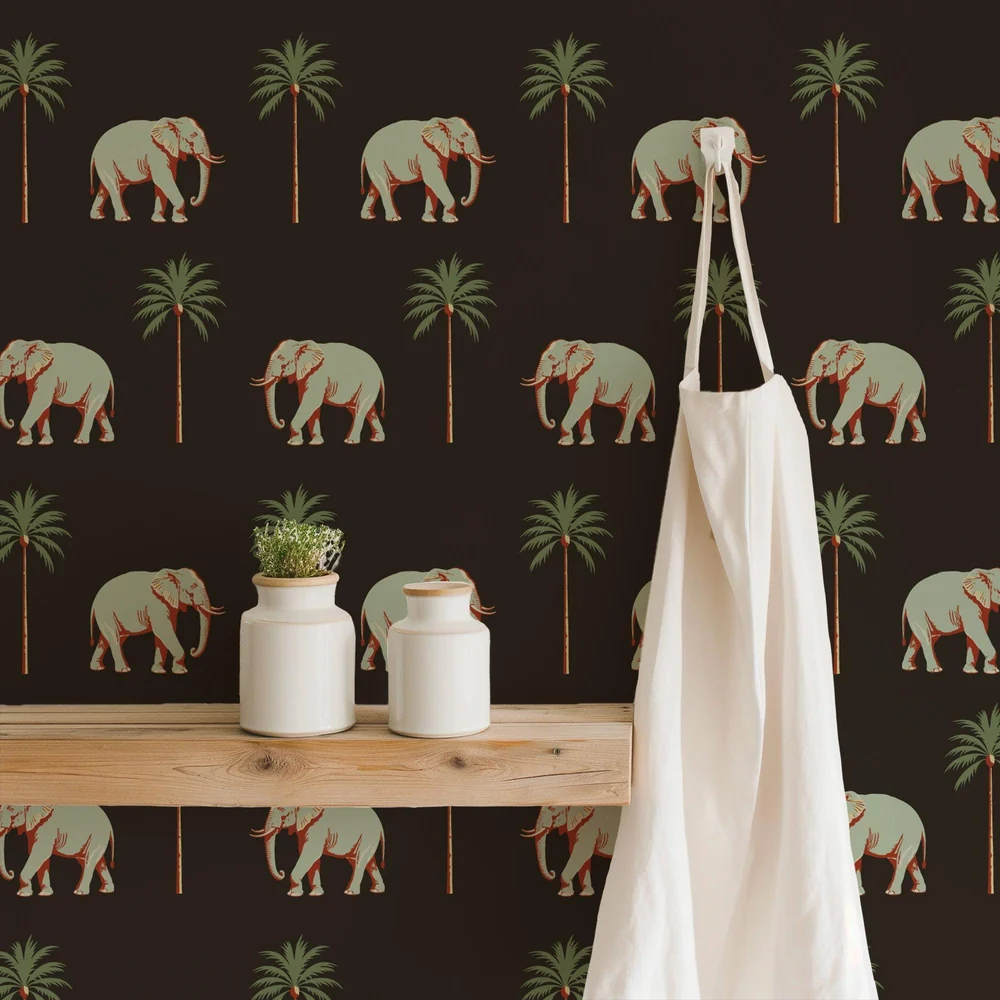
Founded by Lynai Jones in 2012, Mitchell Black evolved from stationery and tabletop goods into a luxury wallpaper studio. Its practice is known for made-to-order wallcoverings, custom murals, grasscloth and artist collaborations, with designs created and manufactured in Chicago.
That origin matters because it frames wallpaper as a form of commissioning rather than a fixed finishing choice. A made-to-order model gives pattern a closer relationship to the room it enters, while custom murals can make scale, placement and atmosphere feel specific to a project rather than selected from a generic backdrop.
The Chicago connection adds another dimension. Design and production remain tied to a particular place, even as the studio’s formats accommodate a range of interiors and collaborations. Local manufacturing is therefore not presented as nostalgia; it is part of a contemporary design model built around flexibility and expressive use.
Studio practice What it makes possible Made-to-order wallcoverings A more personal relationship between pattern and project Custom murals Large-scale expression shaped to an interior Grasscloth Material variation within a richly patterned palette Artist collaborations A platform for distinct creative perspectives
Mitchell Black’s contribution is less about wallpaper as a precious object than wallpaper as an adaptable commission. It makes the case that expressive walls can be both highly authored and practical enough to belong in everyday rooms.
AphroChic: The Wall as a Modern Heirloom
Website: https://aphrochic.com/
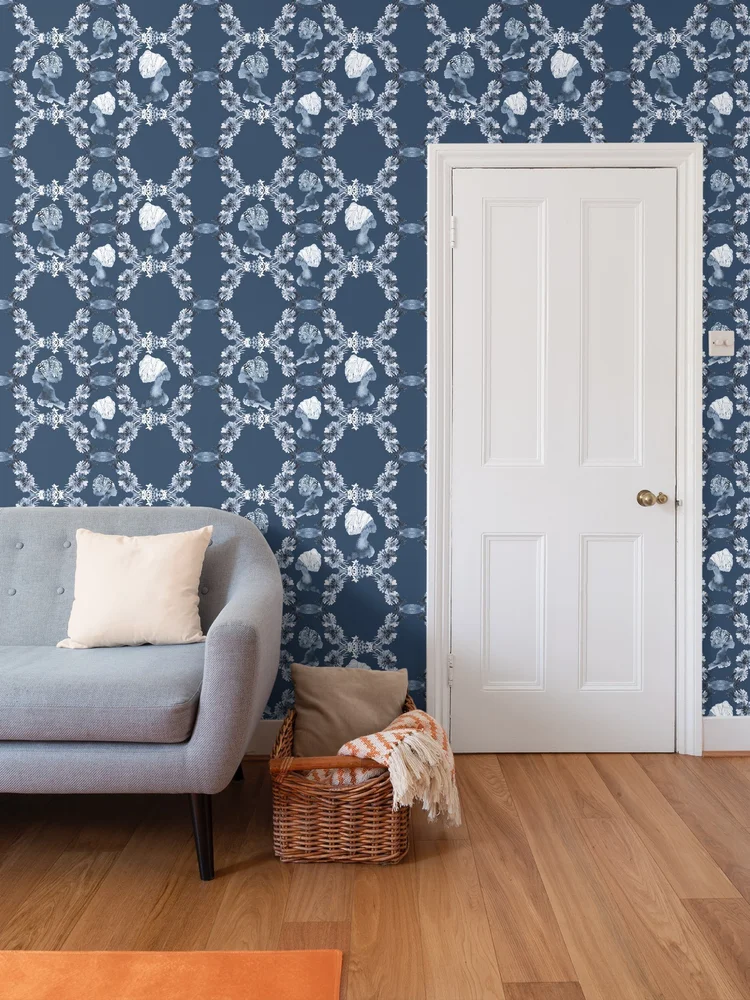
AphroChic was founded by Jeanine Hays and Bryan Mason and grew from a 2007 blog into a design and media platform centered on Black culture, global design and the stories embedded in the home. That evolution gives the brand’s interiors a broader frame: the home is not only a styled setting, but a place where identity and history are continually interpreted.
Wallpaper has been part of that practice since 2009. AphroChic’s collections have included designs celebrating Alvin Ailey and other cultural touchstones, placing pattern in conversation with the people, movements and creative histories that shape Black life and the African diaspora.
The phrase “modern heirloom” is useful here because it describes more than longevity. An heirloom carries memory forward, but it can also be recontextualized by each generation. AphroChic approaches the wall in much the same way, bringing heritage into contemporary living without treating tradition as static or decorative culture as a museum piece.
The result is a particularly expansive idea of home-making. Global references, family history and cultural memory can coexist with present-day furniture and daily routines. Pattern becomes the connective tissue, giving those references a visible and inhabitable form.
Modern heirloomAphroChic treats the wall as a place where heritage can remain active: carried into contemporary rooms, read through personal experience and made part of everyday life.
Elle Gibson: Handcrafted Pattern as Poetic Storytelling
Website: https://www.ellegibson.com/
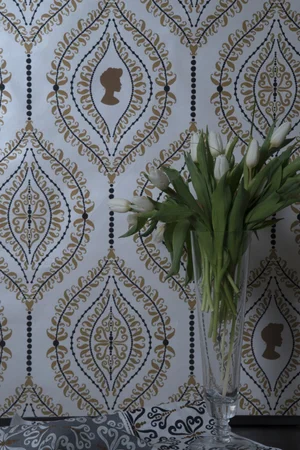
Atlanta-based textile and interior designer Elle Gibson creates expressive wallpapers and fabrics through painting, printmaking and photography. Her work uses joyful color and narrative pattern to give interiors a sense of movement, personality and story.
Global inspiration and custom colorways make Gibson’s practice especially responsive to the people and spaces it enters. Rather than treating pattern as a fixed backdrop, she lets color and image shift the atmosphere of a room while keeping the hand of the maker visible.
The editorial force of Gibson’s work is its sense of handcrafted pattern as poetic storytelling: a way to bring personal and cultural expression into the home through images that feel both intimate and expansive.
Yaël & Valérie: Afro-Caribbean Heritage on the Wall
Website: https://yaeletvalerie.com/
Yaël & Valérie was founded by Haitian designer Valérie Louis and named for her daughter, Yaël. The brand creates luxury wallpaper, textiles and home goods informed by Haitian, Caribbean and African heritage.
Its collections draw from architecture, art, music, Carnival and powerful cultural figures, bringing those references into a vivid visual language for contemporary interiors. The result is pattern that connects the wall to a broader cultural landscape rather than isolating it as a purely decorative surface.
Seen editorially, Yaël & Valérie frames wallpaper as an expression of Afro-Caribbean identity and history, while also foregrounding women-led creative production and the act of carrying heritage into the home.
Ultimately, choosing Black-owned wallpaper brands is an act of thoughtful home-making that allows homeowners to integrate heritage and cultural narratives directly into the architecture of their living spaces. By centering these perspectives, interiors are transformed from passive backdrops into active, expressive environments. These surfaces do more than decorate; they celebrate identity and ensure that the stories defining a culture are both visible and lived within the modern home.