










South Carolina Highway 61 (SC 61) also known as Ashley River Road starts in Charleston, South Carolina, and runs northwest out of the city through the historic lowcountry and its plantation corridor. According to Wikipedia, “Some or all of Ashley River Road was named to the National Register of Historic Places in 1983. In 1993, it was included in the Ashley River Historic District.” The route has connected Charleston and Dorchester counties since 1691. It is one of the oldest roads in South Carolina that is still in use.
The 67-mile stretch of highway has another history that was important to Black lowcountry and Gullah families. SC 61 was a major thoroughfare for moving farmed produce, eggs and meat as well as seafood between inland Dorchester/Charleston and the port city of Charleston. Merchants lined the road selling their goods; some from makeshift stalls, carts and, others who operated storefront markets closer to the city.
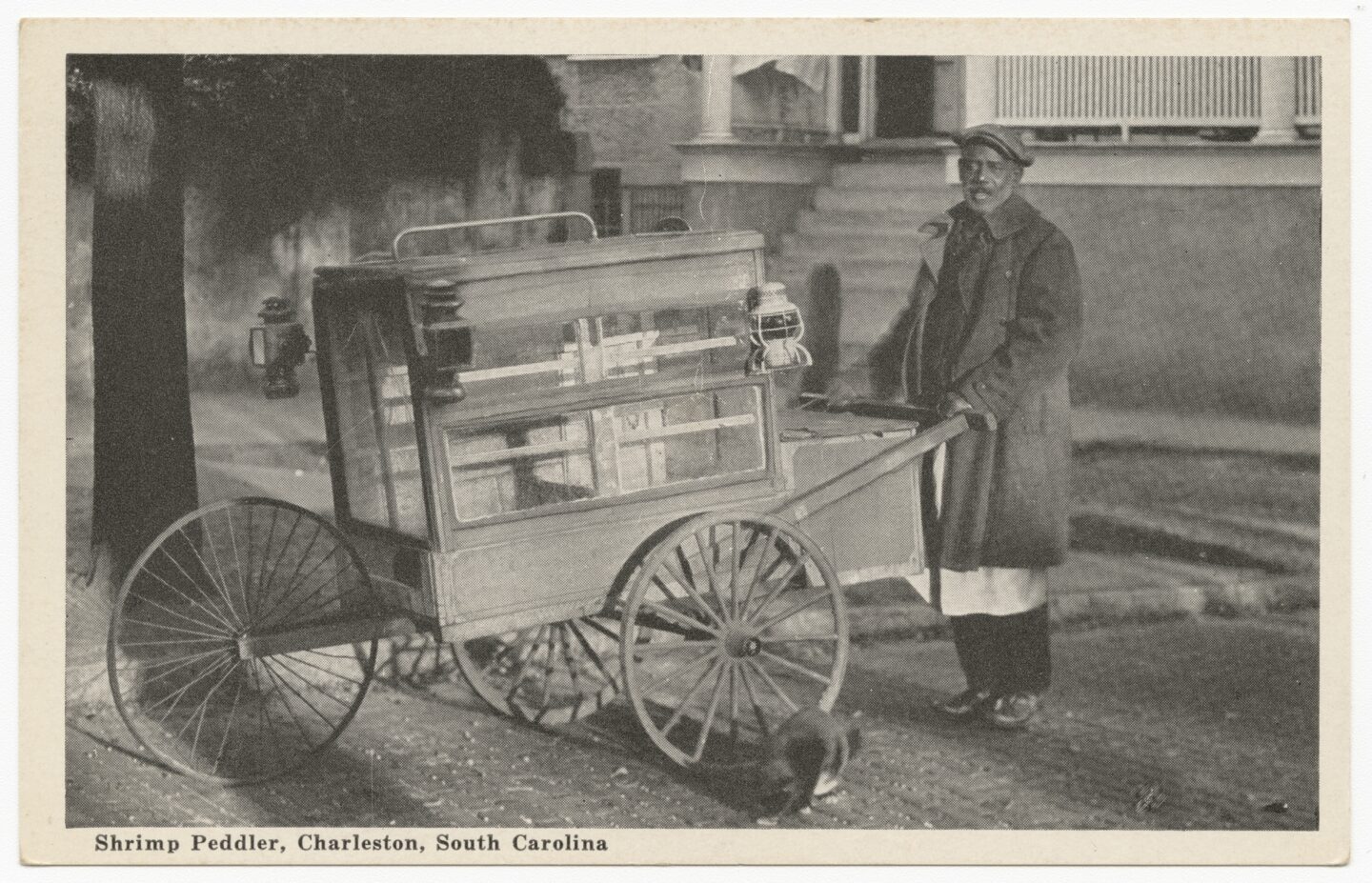
But truth told, the real stars of this vending story were the hucksters, especially the Black men and women who made a living selling agricultural and seafood goods to travelers, hotels and restaurants, and people who loved the freshness of the food for their own consumption.
Charleston historian Nic Butler refers to Samuel Johnson’s Dictionary of the English Language for a fitting definition of “huckster.” Butler writes, “To Johnson and most of the English-speaking world in the eighteenth century, a huckster was primarily ‘one who sells goods by retail, or in small quantities.’ The verb ‘to huckster,’ according to Dr. Johnson, meant simply ‘to deal in petty bargains.’”
Yet, there was nothing petty in the food bargains peddled by Black hucksters. There certainly wasn’t anything petty about their business dealings.

If there is any brilliance to be found in the work and lives of lowcountry and inland Black hucksters, it can be found in the ways in which they often operated as a part of a self-contained ecosystem of suppliers and merchants. There were hucksters with relationships with seafood harvesters and farmers. They, in effect, could act as agents who sold to businesses as a go-between, haggling on behalf of some local and outside parties. There were others who sold what they grew and fished from the water directly to consumers.
A few years ago, BSB mentioned Mary Purvis in an article, “Black Women in Seafood: The History & Heritage.”
Charleston’s “Oyster Woman” Mary Purvis was a free woman of color vending oysters on the streets in the late 1850s and early 1860s. Purvis is listed as a “huckster” in an 1860 city directory, which means she had suppliers as well as a clientele to purchase her wares.
Typically, hucksters were unlicensed vendors. And that didn’t always bode well with white merchants who considered Black hucksters a nuisance and threat to their businesses.
The history of Black hucksters on SC 61 and surrounding areas goes back to the state’s Antebellum period, when some enslaved African men and women as well as free people of color sold their wares. The history of complaints goes back just as far too.
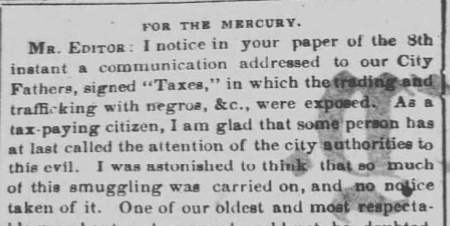
For example, this letter to the editor (The Charleston Mercury, Tue, Mar 08, 1859 ·Page 2) expresses how hucksters go unpunished for selling meat under questionable circumstances.
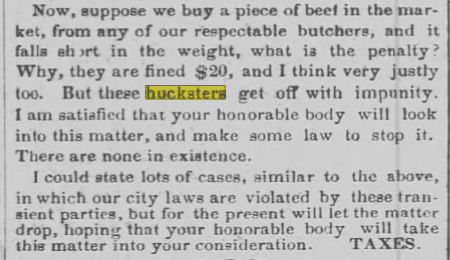
This concerned tax payer complained, in response to the letter to the editor above, about “trading and trafficking” food products with negros” going unpunished by city authorities. (The Charleston Mercury, Thu, Mar 10, 1859 ·Page 2)
Licensed or not, white business owners simply didn’t appreciate having their profits undercut by Black hucksters who operated as agents and sellers. For a country built on free enterprise with little control from the government, these concerned citizens appeared to want to limit who was able to practice it, and how.
According to Nic Butler, “it appears that this local legal conundrum was fueled by the racial politics of the day. To my knowledge, all of the documented grievances against illegal huckstering in eighteenth- and nineteenth-century Charleston point to enslaved people and free people of color.”
The grievances lasted for centuries. Though laws and ordinances changed, some becoming harsher in punishment, huckstering ultimately became deeply embedded in lowcountry and Gullah culture. Families living near SC 61 could rely on purchasing seafood and produce for a fair price.
At times, it’s been celebrated and encouraged.
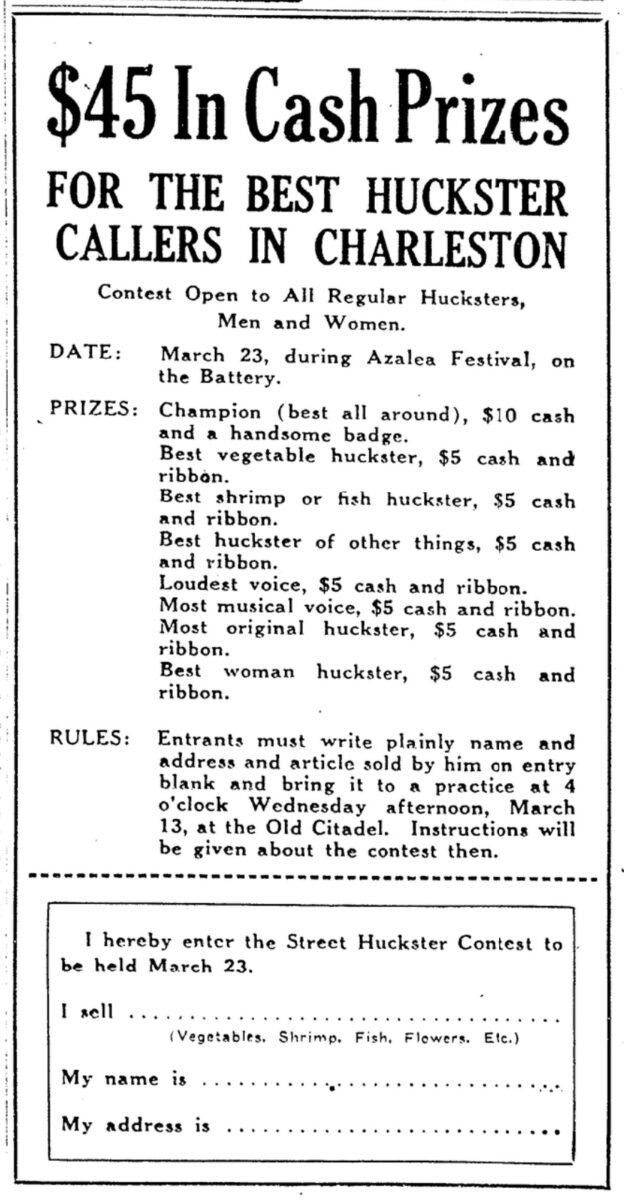
Unlicensed Charleston city huckstering is all but a thing of the past. Food health ordinances, noise ordinances, and other regulations have made it difficult for anyone desiring to vend food in the manner of their Gullah ancestors. Now, a more modern approach to food vending is in order with food trucks, stalls in the City Market and eat-as-you-go carts that cater to tourists and downtown visitors.
Families and individuals driving along the stretch of SC 61 will not find the abundance of watermelon, vegetable and seafood vendors that once existed. If someone wants any of those things, they have to rely on knowing someone who happens to have those goods available (wink) or travel to a nearby grocery store, fresh air market or fish market.
It is worth remembering and celebrating Gullah hucksters from the past, especially as food access and food recalls overwhelm most consumers. These were people who not only peddled fresh, good foods but they also found a way to care for their own families as astute entrepreneurs that offered affordable options to consumers.
If you are interested in learning more about the practice of huckstering, read Nic Butler’s “Hucksters’ Paradise: Mobile Food in Urban Charleston,” Part 1 and Part 2 on the Charleston Public Library website. If you want to hear archival Charleston huckster cries or calls, visit the Internet Archive’s THE STREET CRIES OF CHARLESTON; by THE FISH, FLOWER AND VEGETABLE HUCKSTERS; Walter C. Garwick The Society For The Preservation of The Spirituals.



Robin Caldwell is the blogger behind freshandfriedhard.com and academic researcher focusing on Black history, heritage and culture. Public historian primarily in Black American historical foodways: antebellum and regional.
