







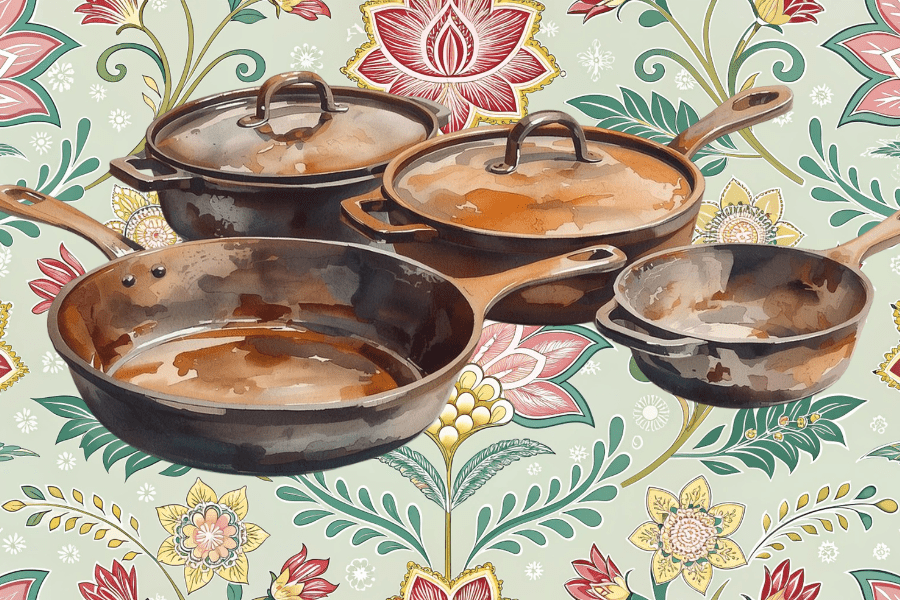
Cast iron cookware has been a staple in Southern kitchens for generations, cherished for its durability, exceptional heat retention, and unmatched versatility. It’s the perfect choice for crafting classic Southern dishes that require a gentle touch and a steady heat. Here are some tips to help you choose the best cast iron pieces for your culinary needs, with a nod to Southern heritage.
Tips for Selecting Cast Iron for Your Kitchen with a Southern Flair
- Consider the Type of Cast Iron
There are two main types of cast iron cookware: traditional cast iron and enameled cast iron.
- Traditional Cast Iron: This type of cookware requires seasoning to maintain its non-stick surface and prevent rusting. It’s perfect for high-heat cooking methods like frying up some Southern-fried chicken or searing a juicy steak.
- Enameled Cast Iron: This type features a coating of enamel that prevents rust and eliminates the need for seasoning. It’s ideal for slow-cooking and simmering, making it a trusty companion for a pot of rich gumbo or a hearty stew. Plus, it comes in a variety of colors to match your charming Southern kitchen décor.
- Assess the Weight
Cast iron is heavy, but there is some variation in weight among different brands and styles. Ensure you’re comfortable handling the cookware, especially if you plan to use it frequently for those large family gatherings. If possible, lift the pan in the store to get a feel for its heft.
- Check the Surface
Examine the surface of the cast iron. For traditional cast iron, look for a smooth surface that will improve with seasoning. Avoid pieces with rough or uneven surfaces, as these can lead to sticking and uneven cooking, which could ruin your grandmother’s biscuit recipe.
- Look for Quality Construction
Inspect the construction quality of the cast iron cookware. High-quality pieces should have:

- Thick walls and base: This ensures even heat distribution and better heat retention, perfect for slow-cooked Southern favorites.
- Sturdy handles: Handles should be securely attached and robust enough to support the weight of the pan.
- Tight-fitting lids: If the cookware comes with a lid, it should fit snugly to trap heat and moisture, essential for keeping those Southern collard greens tender and flavorful.
- Consider the Size and Shape
Think about the types of dishes you plan to prepare. A 10-12-inch skillet is versatile for most tasks, from frying cornbread to making a peach cobbler. A Dutch oven is great for soups, stews, and baking that classic pot roast. Determine the right size based on your cooking habits and the number of people you typically cook for.
- Evaluate the Price
Cast iron cookware is an investment, but prices can vary widely. While it’s tempting to choose a cheaper option, investing in a high-quality piece can save you money in the long run due to its durability. Consider reputable brands known for their craftsmanship, as they’ll likely become heirlooms passed down through your family.
- Review the Maintenance Requirements
Understand the maintenance each type of cast iron requires. Traditional cast iron needs regular seasoning and careful cleaning, much like tending to a garden, while enameled cast iron is typically more low-maintenance but still requires a bit of tender loving care.

Comments