













“I find, by close observation, that the mothers are the levers which move in education. The men talk about it . . . but the women work most for it.”
Frances Ellen Watkins Harper
There has always been a public school ‘crisis’ in America, at least for Black children and parents. Black parents working in tandem with teachers and others in the community to provide solutions is a time-honored model that has continued to work through generations of inequities in public school education. This story is about the movements started by Black parents, educators, librarians, and community organizers to unite, to create, protect, and enrich educational experiences for Black youth.
From the founding of independent schools in the late 19th and early 20th centuries to grassroots activism during the Civil Rights Movement, and extending into post-Civil Rights and contemporary community-based initiatives, the narrative illustrates how Black communities have consistently provided solutions to educational inequities.

As the children learned so did parents
The history of parent-teacher collaborations is older than freedom for African Americans in this country. Churches and schools anchored towns and neighborhoods established by free people of color before the Civil War. Not only did those ‘anchors’ prove important to residents, they also proved beneficial to the thousands of self-emancipated and newly emancipated people following the war. Church buildings were often the first school buildings, which provided an elementary education to students, parents and others adjusting to freedom, especially given that the enslaved could be punished if it was found that they were literate or attempting to read and write.
Building schools and initiatives that were models of self-determination during the Jim Crow era
We know that Robert Smalls, a doer by nature, was one parent who put in the work when it comes to an education model that has stood the tests of time, and location. Smalls served in the South Carolina Legislature and the United States House of Representatives during the Reconstruction era. During his tenure as a politician, Smalls authored state legislation providing for South Carolina to have the first free and compulsory public school system in the United States. Robert Smalls made it extremely difficult for school boards and districts to flat out deny an education to Black children, because if they tried their own children would suffer.
Educator, abolitionist and voting rights activist Frances Ellen Watkins Harper came from a family of Black educators who, like many others, created schools for Black children in the face of segregation. As a mother, she was also one of “the levers” she spoke of, in the way in which she worked with Black teachers and other parents, leveraging her relationships and networks as a clubwoman. She once addressed the whites-only National Congress of Mothers‘ (later known as the Parent-Teacher Association or PTA) first meeting in 1897, she made an appeal to the group of white women to consider the needs of Black children. The appeal fell on deaf ears. It never stopped her from fighting the good fight as part of a collective.
Selena Sloan Butler, an Atlanta mother opened a kindergarten in her home to service Black children as she insured an education for her young son. It was after Henry entered elementary school in 1911 that Selena Butler founded the first PTA for Black parents: the National Congress of Colored Parents and Teachers Association (NCCPT) at Yonge Street Elementary School. By 1919, a statewide chapter had been formed and in 1926 four states participated in the organization’s national convention. More states would join NCCPT before its merger with the National PTA in 1970.
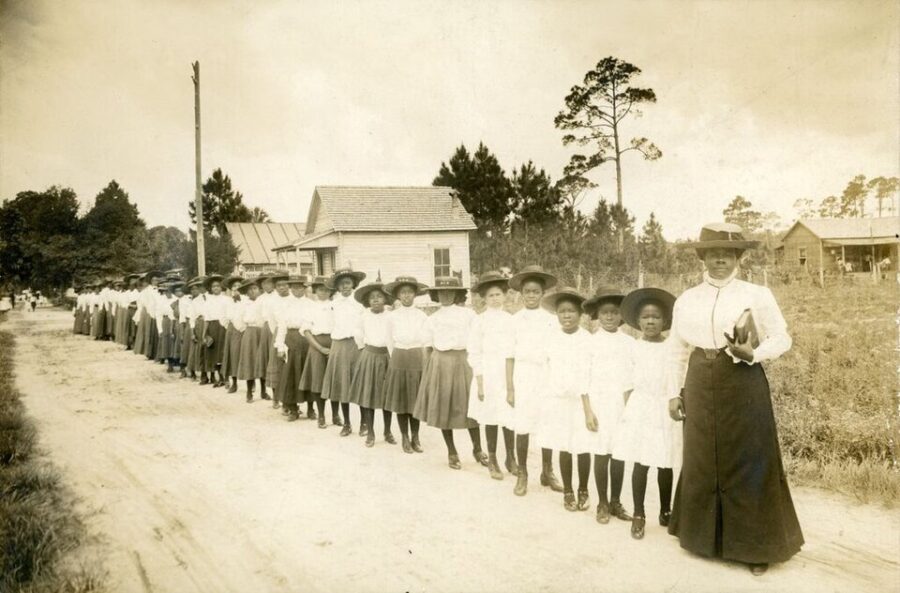
Visionaries like Mary McCleod Bethune and Elizabeth Evelyn Wright founded normal schools that eventually became colleges. Wright, who received her education in a church basement as a child, founded what would become Voorhees University. Bethune was educated by Presbyterian missionaries in a one room schoolhouse in South Carolina, which inspired her to found the Educational and Industrial Training School for Negro Girls in Daytona Beach, Florida that transitioned into Bethune-Cookman College.
In 1883, Lucy Craft Laney founded the Haines Normal and Industrial Institute in Augusta. According to the New Georgia Encyclopedia, “Haines not only offered its students a holistic approach to education but also served as a cultural center for the African American community. The school hosted orchestra concerts, lectures by nationally famous guests, and various social events. Laney also inaugurated the first kindergarten and created the first nursing training programs for African American women in Augusta.”
These women didn’t live in a silo as other Black mothers (and fathers) around the country stepped in and championed the rights of Black children to have equitable educations in the face of white opposition, and public school administrations that provided little to no funding support.
Grassroots activism for access to resources and not proximity
Many mistakenly believe Black parents were fighting for proximity and closeness to whites, when they were really fighting for an equal distribution of resources and access to those resources for their children.
Mississippi-born Ruby Elizabeth Stutts Lyells spent her adult life advocating for improvements in African American education, including enhanced access to valuable resources in public libraries, using her position as the first professional librarian in the state of Mississippi as well as her civic affiliations with organizations like the NAACP. If the schools and libraries were not allowing equal access, she pushed to add improvements that benefited Black students in two of Jackson’s libraries designated for Black student use. She won on behalf of the parents and students in the community.
Septima Poinsette Clark’s work in South Carolina as an organizer and educator focused on building up parents by developing adult literacy and Citizenship Schools, where she taught sharecroppers and rural Black adults how to read, register to vote, and assert their rights. Clark taught sixth grade at Charleston’s Avery Normal Institute, a private academy for Black children. One of her boldest feats as an educator involved leading her students around the city, going door-to-door, asking for signatures on a petition to allow black teachers in Charleston’s public schools. The students did the asking, and Black parents did the signing. In 1920, Black teachers were allowed to teach in the Charleston public school system, thanks to her efforts.
Parents, teachers and organizers risked their lives and livelihoods for equal schooling
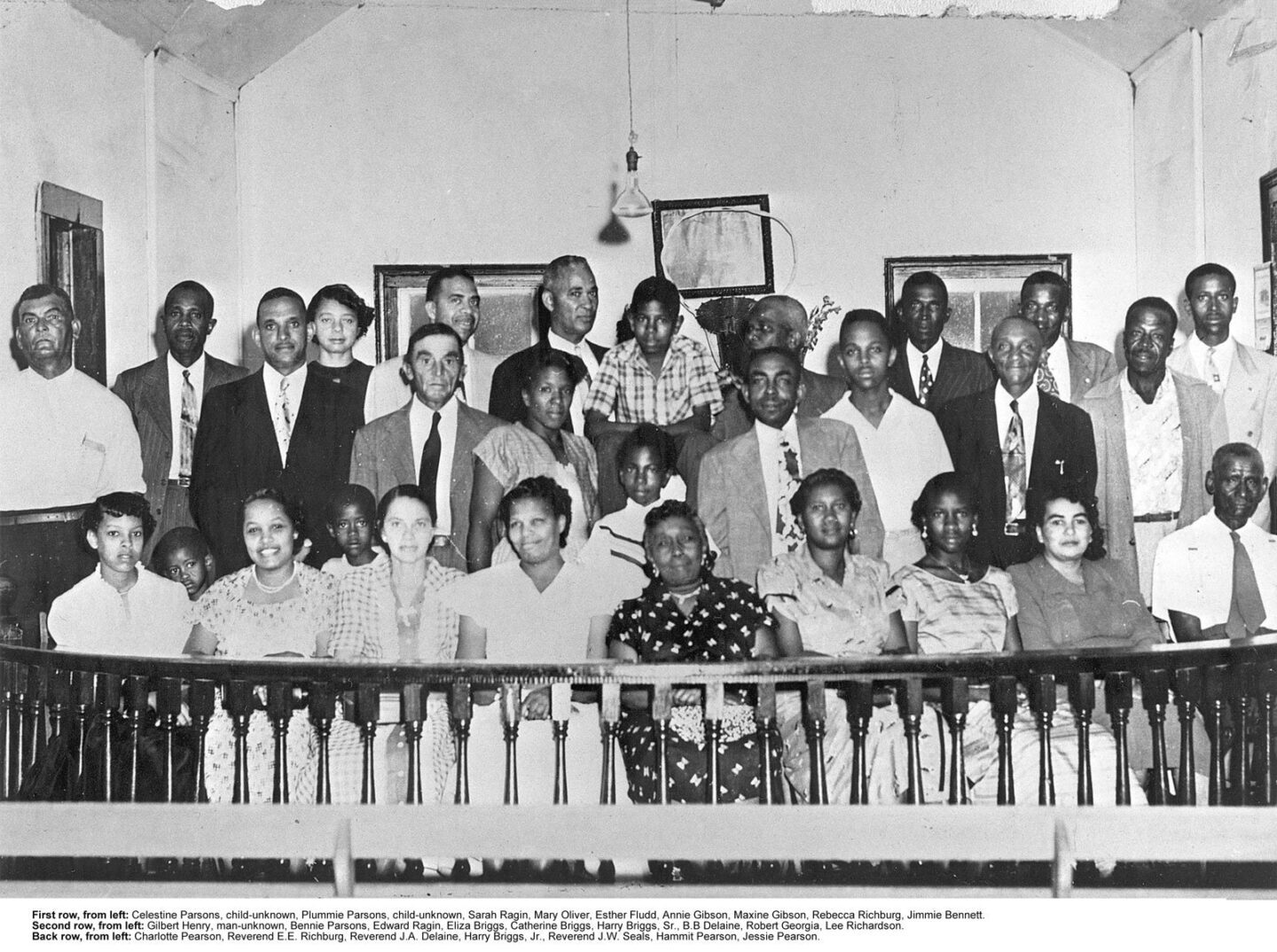
Most of us know Brown v. Board of Education and immediately think of Linda Brown. But the case was the merger of four cases, including the Brown family’s, which came much later in 1954. One of the other cases was Briggs v. Eliott (1951), the first and unsung case, involving Harry and Eliza Briggs of Summerton, SC. The Briggses were a gas station attendant and hotel maid who lost their jobs and had their lives threatened because they challenged the Clarendon County school board over conditions that were anything but equal. According to The 74, “While taxes paid by African American parents helped support the buses used by white students, black children were forced to walk as far as eight miles each way in order to attend their public schools.” What made the Briggs family and the other families participating in the case so remarkable is that they did everything within their power to keep their children in school. They had no interest in attending the white school. So they pooled their resources to purchase school buses, buy gasoline, and provide maintenance for the school, which included digging makeshift outhouses. Their efforts worked until they didn’t, and families required the school board to invest in their Black school. You can read more: Briggs v. Elliott brought us Brown v. Board of Education. Here’s how. PBS American Experience.
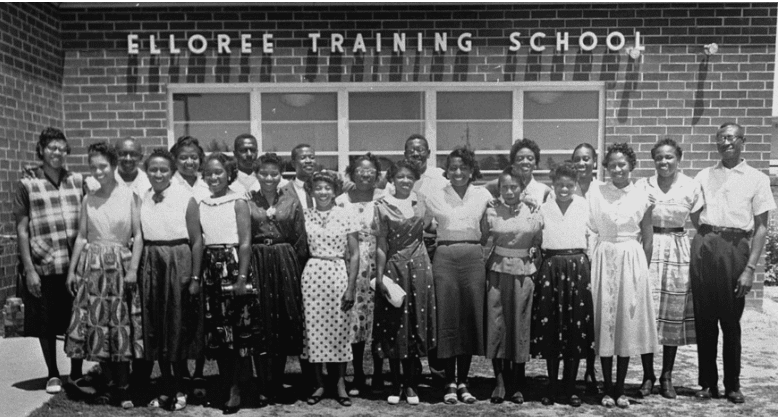
The sacrifice of the Elloree 21, a group of Black teachers in Elloree, South Carolina, is an example of how teachers working in an all-Black school were being forced to choose between their jobs and their civic activities, primarily their memberships in the NAACP. According to the Zinn Education Project, “In March 1956, the South Carolina general assembly passed a number of laws meant to fight back against the desegregation mandated by the recent U.S. Supreme Court decision in Brown v. Board of Education. One of these many repressive laws was an anti-NAACP oath that prohibited any government employee — local, county, or state — and their families from being members of the NAACP.” The teachers refused to sign the oath and resigned though they were subsequently fired. Before the case reached the Supreme Court, the state repealed the anti-NAACP oath though the teachers were considered unhireable in Elloree and surrounding counties for many years. For context, Black teachers were offered no protections under Brown v. Board of Education, they were already vulnerable, so when they were asked to distance themselves from the NAACP the group stood on principle for the greater good. One of the teachers, Gloria Rackley, handed in her resignation accompanied by her teenage daughter, Lurma. Gloria and some of her cohorts continued fighting for the rights of Black teachers to not renounce their NAACP memberships but also their right to have the same standard contract as white teachers.
The collaboration between Black educators, parents and community organizers is an ongoing relationship
Black educational spaces—whether private, informal, or community-based—were designed not merely for academic instruction, but to nurture Black pride, agency, and humane care. In 2026, parents with teachers and other community partners continue in the tradition of 19th-century mothers and fathers as well as activists in between, including the 1964 Freedom Schools and present-day institutions that offer the resources Black children need to compete in the world at large.



Robin Caldwell is the blogger behind freshandfriedhard.com and academic researcher focusing on Black history, heritage and culture. Public historian primarily in Black American historical foodways: antebellum and regional.
