







Tomatoes are an essential staple in Gullah-Geechee cuisine. Traditional recipes like chow chow, tomato gravy, tomato-okra soup, perloo, Sea Island okra gumbo and Gullah Geechee Red Rice are tomato-based. And sometimes a southern pleasure can be found in a simple ‘mater sandwich recipe or eating a ripe tomato as is, plucked straight from the garden with a dash of salt.
The Gullah-Geechee are as wed to the tomato as they are to okra and rice. The relationship is as old as their existence in Coastal South Carolina, Coastal Georgia and what is now called the Gullah-Geechee Corridor. According to the Zinn Education Project, the first enslaved Africans arrived on the Georgia-South Carolina Coast in 1526 and they were “taken either directly from West Africa or through the brutal slave markets of the Caribbean.” Brought to the Sea Islands by the Spanish, they rebelled and were never recaptured. Most of their Spaniard captors returned to Spain, defeated. But they would return, almost a century later.
In Caroline Sanders Clements’ Garden & Gun story, “The Southern Story of Tomatoes,” author William Alexander (Ten Tomatoes That Changed the World) explains, “‘We know the first place they were grown on American soil is on the Georgia and Carolina coasts, and they were either brought here by Spanish settlers in that region who had come up from Florida and the Caribbean, or they were possibly brought in by English settlers, though I don’t think that’s likely.’”
Alexander shared something else very interesting about tomatoes: Enslaved Africans, especially plantation cooks, influenced the popularity of tomatoes in the South. He told Clements, “‘Tomatoes also have such a strong tradition in Gullah Geechee culture and cuisine. They weren’t being eaten at all in the North at this time.’” He explained that white Europeans thought tomatoes were poisonous, and they didn’t know how to deal with garden pests like their captured labor from the Caribbean (likely Barbados or Jamaica) and Africa. Hidden between the lines was the fact that enslaved Africans were likely the ones to plant, cultivate and harvest tomato crops on farms and plantations.
Before emancipation, rice and cotton were the chief money-making crops along the Gullah-Geechee Corridor. The commodification of tomatoes didn’t explode until the mid-1800s, when the tomato’s popularity finally reached the North with a hiccup. Tariffs. Northern tomato buyers purchased from the South, mainly South Carolina. The Civil War brought on a northern boycott of southern-grown tomatoes, and northerners started importing their tomatoes straight from the Caribbean. After the Civil War, southern growers wanted their northern customers back, so after some lobbying and coercion, they managed to have a 10% tariff slapped on imported produce, which lured their northern customers back.
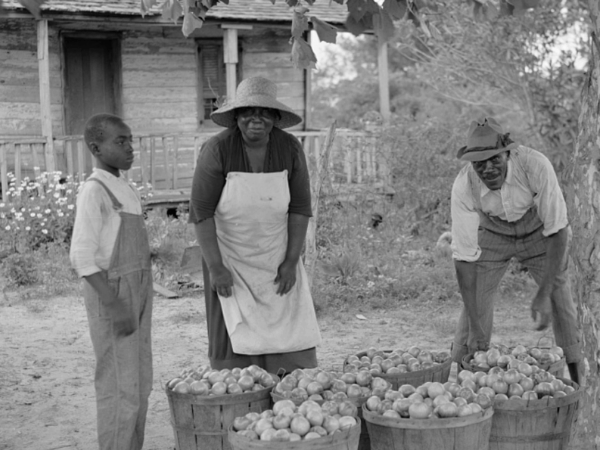
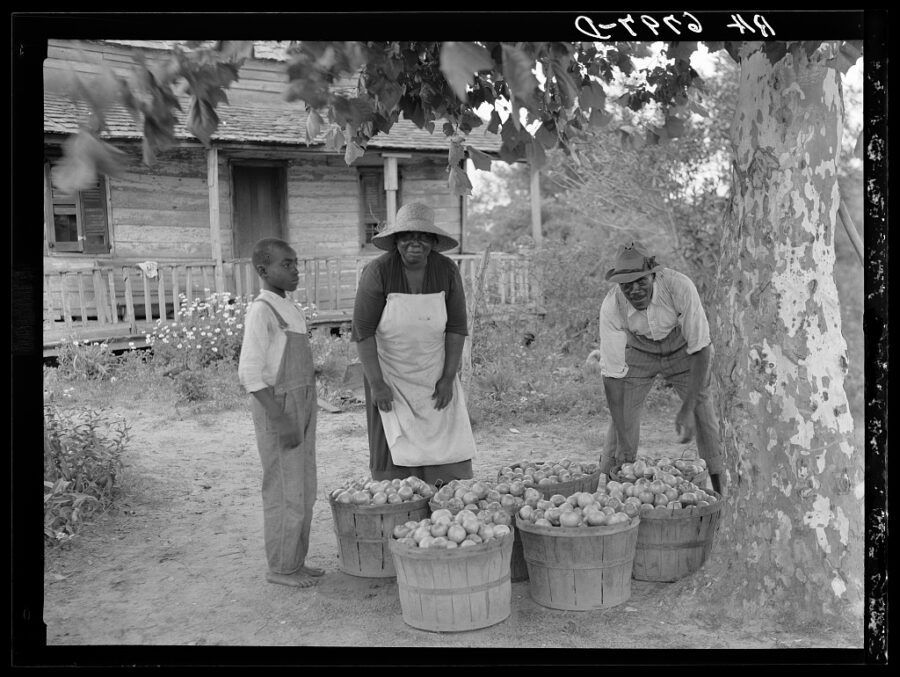
In the late 1920s throughout the 1930s the Seacoast Packing Company on Lady’s Island in Beaufort, SC was a source of seasonal employment for Gullah-Geechee people. The packing plant accommodated packing large orders of tomatoes and other produce for shipping, and it also served as a space for tomato canning. Some Gullah share-cropped and picked tomatoes, others worked as packers, and there were women who canned tomatoes inside the plant.

Here we are, many years later in SC’s tomato history, and according to the Island Packet, “As of 2017, there were 729 farms growing tomatoes on 2,805 acres of tomatoes in South Carolina, according to the state Department of Agriculture.” How many of the 729 farms are Gullah-owned is unknown, but the newspaper reported that white-owned Seaside Farm Inc., on Saint Helena Island ships three-quarters of a million 25-pound boxes of tomatoes “everywhere east of the Mississippi, from Canada to Puerto Rico” during the month of June to early July. Florida and California account for 75 percent of US production of field-grown tomatoes.
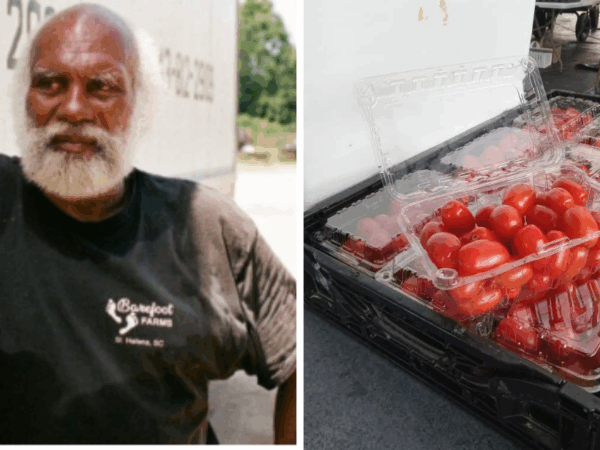
The Gullah Farmers’ Cooperative Association (Saint Helena Island) has a list of farmer-partners on their website, including Jacky Frazer of Barefoot Farms, who grows tomatoes and cowpeas, watermelon and more. Important to note, the cooperative supplies tomatoes to local food banks and other programs as a part of their mission to provide culturally relevant foods such as sweet potatoes and okra to the communities they serve.
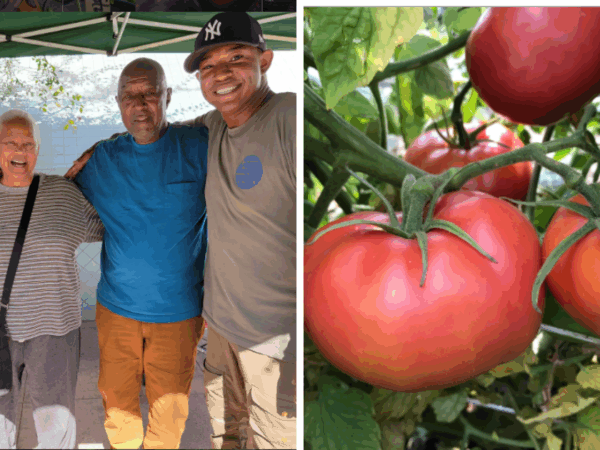
Southern California nursery co-owners Jimmy and Logan Williams (Logan’s Garden) possess one of the most personal (and powerful) testimonies of a Gullah-Geechee connection to tomatoes. It begins with the story of Jimmy’s great-great grandmother, a young Caribbean slave, smuggling what is now known as the Goose Creek Tomato seed, with her aboard a ship that docked at Charleston in the 1800s. As a child, Jimmy’s grandmother, Elouise Watson, shared this heirloom with him and it remains with him to this day. The sixth-generation seed gift is registered in heirloom seed banks. The Goose Creek Tomato is literally a Gullah gift that keeps on giving. You can read more about Jimmy and his ancestors in his book From Seed to Skillet: A Guide to Growing, Tending, Harvesting, and Cooking Up Fresh, Healthy Food to Share with People You Love.
Additional Resources
Logan’s Gardens Shifting Culture One Plant at A Time, a podcast featuring Jimmy and Logan Williams discussing heirloom seeds and their family business
“A Hunger for Tomatoes” by Shane Mitchell for the Bitter Southerner (a wonderful story about modern tomato farms in Beaufort and Florida that focuses on the labor)
[**Outside of the Sea Islands, Thomas Jefferson grew, cultivated and ate tomatoes according to his garden books. They were a staple in his vegetable garden from 1809 to 1824, some 200 years after their introduction in Georgia and South Carolina. The Monticello site states, “Jefferson always credited a Portuguese doctor who came to Williamsburg in the mid-eighteenth century with being the first to introduce the tomato as a food plant to Virginia. This Dr. Sequeyra firmly believed that daily consumption of the tomato not only maintained health but prolonged life. It was, though, quite uncommon in some parts of Virginia for the tomato to be eaten.” The former president and founding father kept over 600 humans captive as laborers on his grounds, it is without question that those individuals were the chief gardeners and cultivators of his tomatoes.]



Robin Caldwell is the blogger behind freshandfriedhard.com and academic researcher focusing on Black history, heritage and culture. Public historian primarily in Black American historical foodways: antebellum and regional.
