

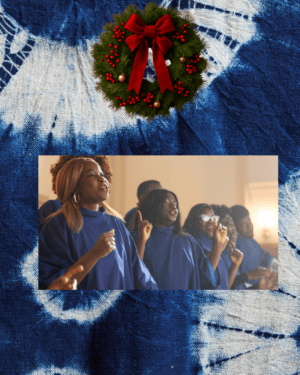


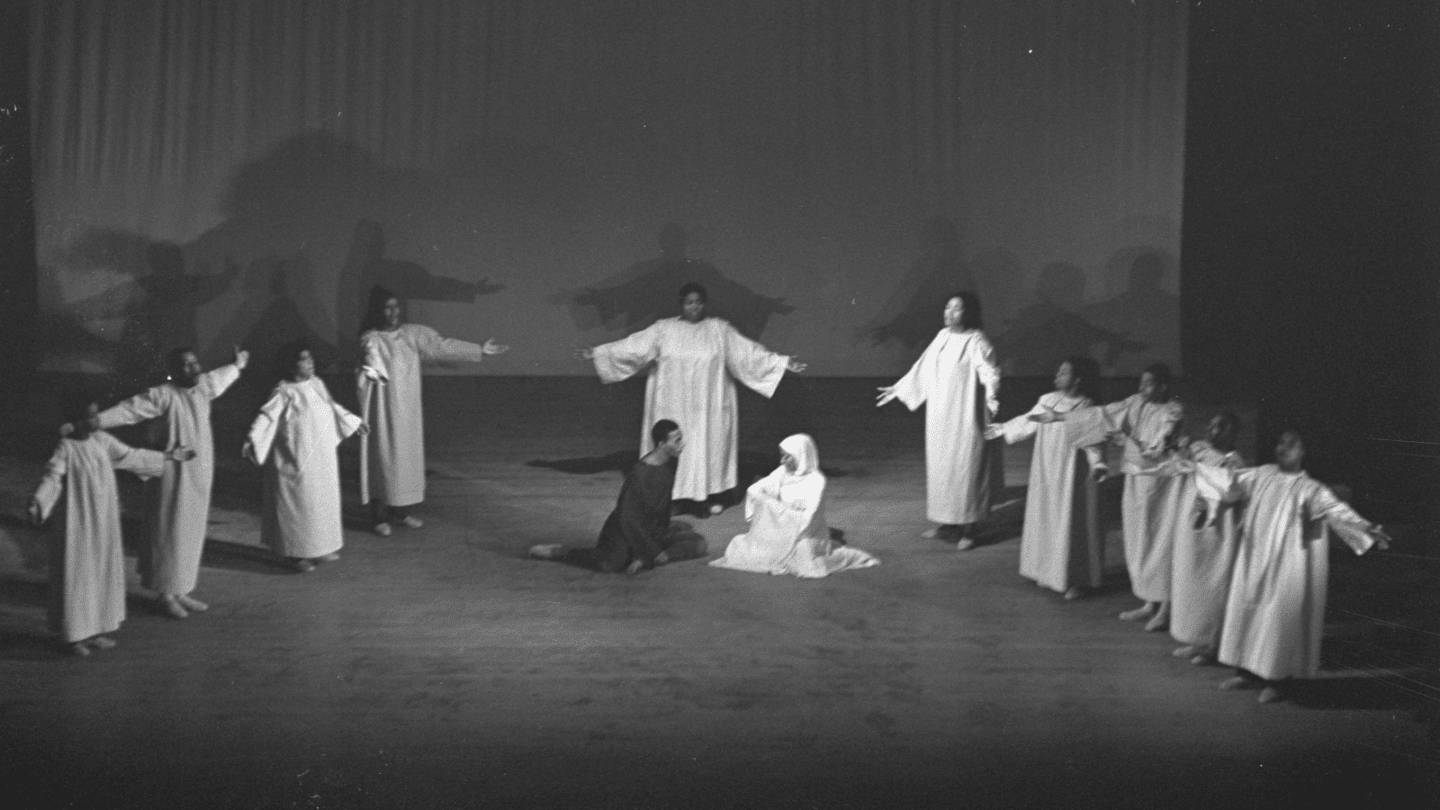
Written six years before his death, “Black Nativity” is one of Hughes’s final works, and one of his most performed plays. Its sustainability is attributed to its gospel-theme and to the myriad ways creative directors have interpreted it over the years. Whatever the case, it marked an important turn in his writing, one that centered Black talent and a Black Jesus. In its own way, the play was an ode to the Great Migration story that synced a Black southern past with a Black urban present and future.
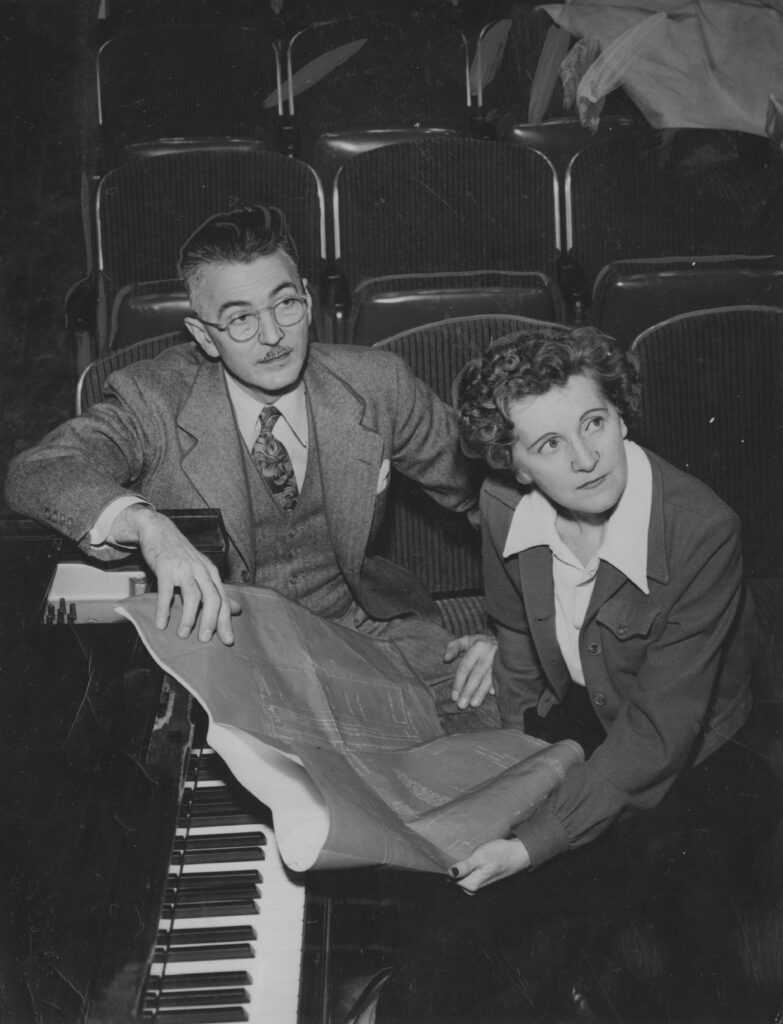
Russell and Rowena Jelliffe in Karamu House theater, 1949 via Cleveland Public Library
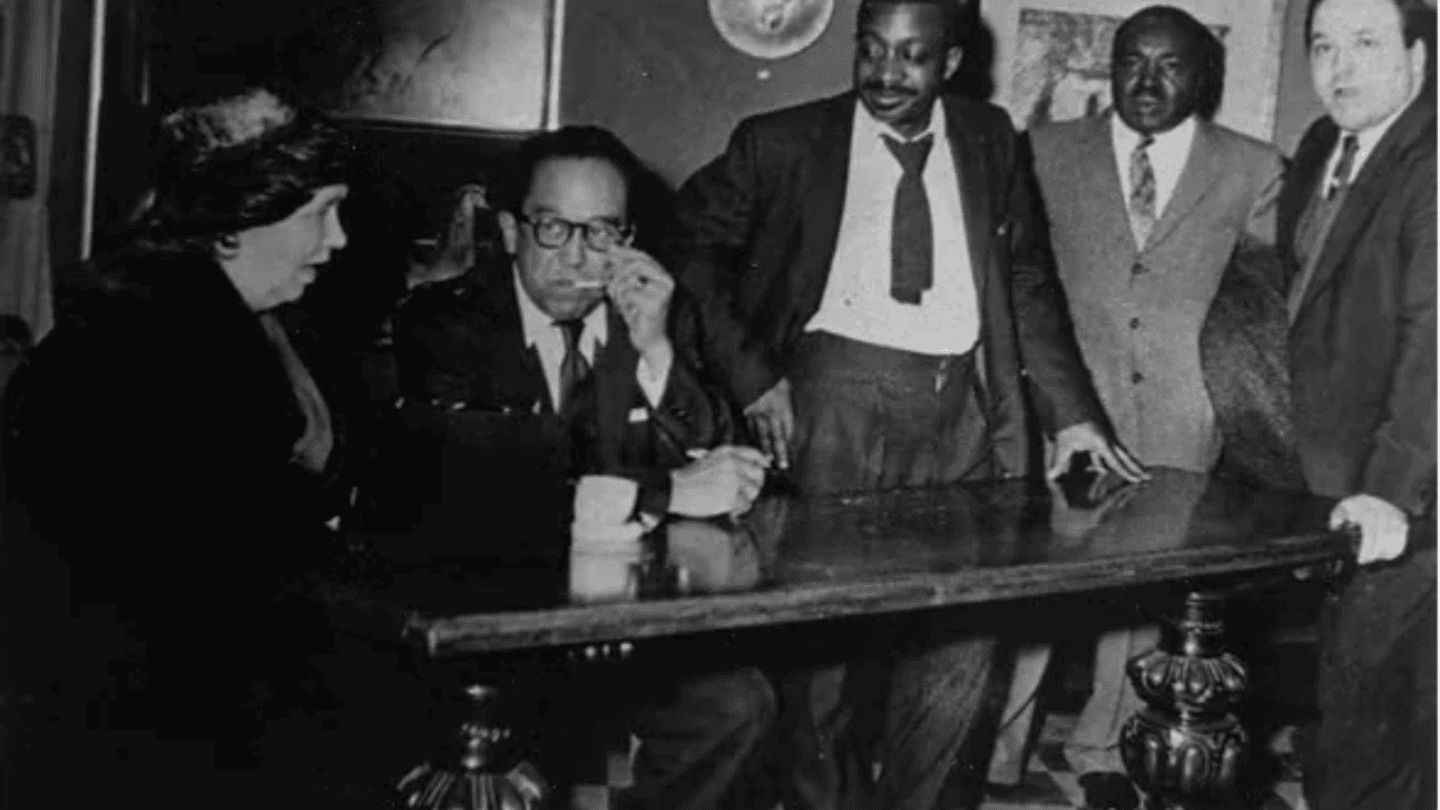
In 1961, Russell and Rowena Jeliffe, the co-founders of Karamu House in Cleveland, Ohio, commissioned former Cleveland resident and Karamu alum Langston Hughes to write Black Nativity: A Gospel Song Play, originally titled Wasn’t That a Mighty Day. Hughes had developed and premiered a number of his plays at Karamu, which began as a neighborhood settlement house in the early 1900s, offering classes for children, daycare and other social services to a growing Black population. By 1961, Karamu had grown in its reputation for nurturing the careers of Black talent – children of the Great Migration in many cases – and as the oldest producing Black theater in the United States.
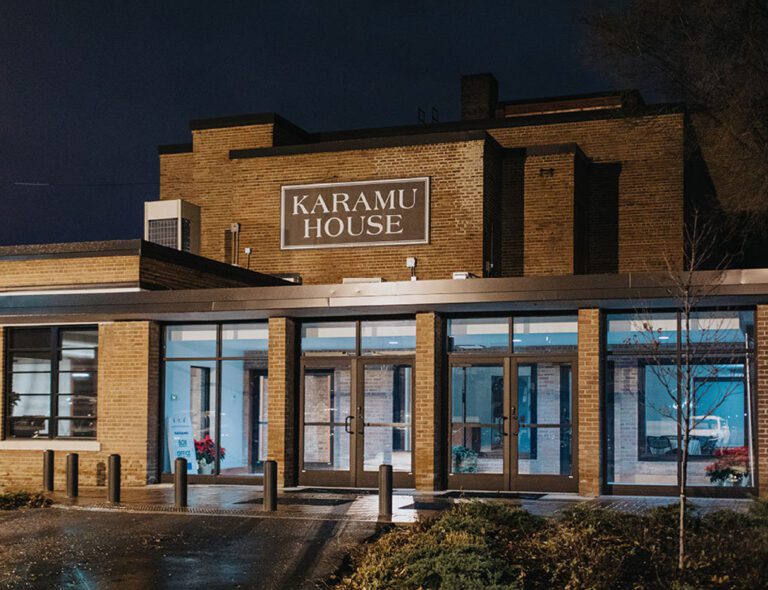
photo via Karamu
According to Karamu’s website, “Notables of Karamu House not only include playwright Langston Hughes, but also authors Zora Neale Hurston and Lorraine Hansberry. Other Karamu House alumni that have distinguished themselves on stage and screen include: Ruby Dee, Robert Guillaume, Ron O’Neal, Bill Cobbs, Ivan Dixon, Minnie Gentry and more recently, James Pickens (“Grey’s Anatomy”), Imani Hakim (“Everybody Hates Chris”), Debra Byrd (vocal coach and arranger for “American Idol” and “Canadian Idol”).” And one of its latest alums is the Grammy Award winning singer Durand Bernarr.
Writer Dominic Taylor writes (Faith on View), “Hughes’ desire to write “Black Nativity” was his attempt to reclaim the story of Jesus’ birth for African Americans – to show the son of God, the ultimate salvation, emerging from the Black community. American notions of Jesus were almost always depicted as white, with just a few exceptions. Hughes’ play, on the other hand, called for an entirely Black cast, including the mother and father of Jesus.”
Black Nativity: A Gospel Song Play possessed many hallmarks by Hughes’ design. The inclusion of the community as extras, the chorus, and crew was something he intended for the play. He also included songs written by Black composers, including “Go Tell it on the Mountain,” as published by John Wesley Works Jr., a former choral director for the Fisk Jubilee Singers. It is a story told using many creative devices such as dance, poetry, song, and pantomime.

Before the play was to make its Off-Broadway debut on December 11,1961, dancers Alvin Ailey and Carmen de Lavallade withdrew from their roles as Joseph and Mary. They objected to the title change, which they viewed racialized Jesus and the gospel story. Dancer Clive Thompson and ballerina Cleo Quitman opened in their place, requiring the choreography be changed in a week’s time. The opening was met with some criticism, namely the small size of the stage, but it would tour throughout Europe, where it was well-received and a success.
Ironically, Karamu House didn’t stage the play until the 1970s. According to Cleveland Magazine, “Karamu’s artistic director revived the show in 1979 after finding the script alongside other early Hughes works in a Karamu filing cabinet.” Though it isn’t an annual, Black Nativity has been staged by Karamu, most recently in partnership with the Cleveland Playhouse, over 30 times.
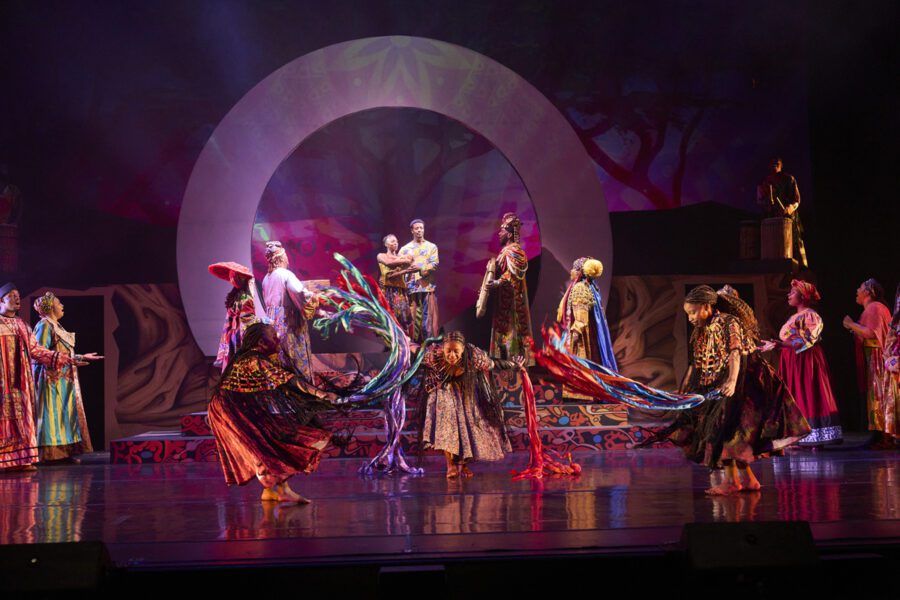
Photo by Roger Mastroianni
In 2023, Karamu’s Black Nativity was co-directed by Tony Sias and Erinn Weaver, who interpreted Hughes’ original intent for the play as an Afrofuturistic view of the birth of Christ. The production brought Black Nativity’s origin story full-circle.
The longest-running production of Langston Hughes’s Black Nativity is staged annually in Boston, Massachusetts, by the National Center of Afro-American Artists. It is currently in its 56th season.
Black Nativity has traveled the world and continues to be interpreted throughout the United States. It has been staged as small productions and big budget productions. It has introduced many people to the power of theater and community. It has also given actors, dancers and other creatives their breaks in the theater.
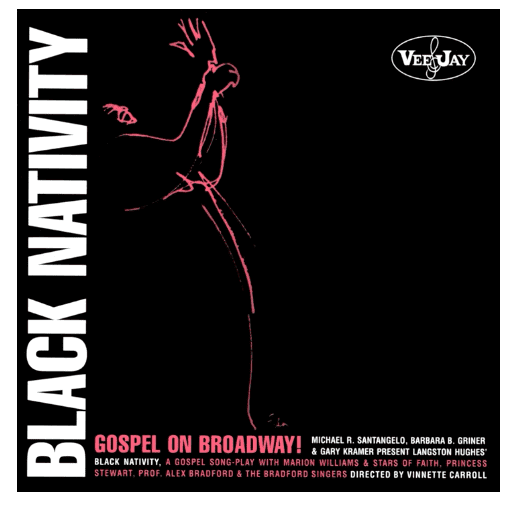
If you want to read a copy of his play, visit the Internet Archives. The original cast recording of Black Nativity featuring Marion Williams & the Stars of Faith, Princess Stewart and Prof. Alex Bradford & the Bradford Singers is available on YouTube. Google Arts has a wonderful online exhibit of the play. And if you want to watch the movie version of Black Nativity it is available on Amazon Prime.
Did Langston Hughes know that Black Nativity would become a gift that keeps on giving? We have no idea. But it is indeed his Christmas gift to his people.



Robin Caldwell is the blogger behind freshandfriedhard.com and academic researcher focusing on Black history, heritage and culture. Public historian primarily in Black American historical foodways: antebellum and regional.
