


“When you suddenly find your tongue twisted…as you seek to explain to your six-year-old daughter why she can’t go to the public amusement park…then you will understand why we find it difficult to wait.” – Martin Luther King, Jr., “Letter from Birmingham Jail” (1963)
Recreation has always been a matter of importance to African Americans. Often we had to partake of recreational activities as creatively as the law, literally, allowed. We didn’t wait for public accommodation laws to change to create our own spaces and places to find rest, recreation and ways to reunite with our families and friends. We also didn’t wait to use public accommodations on permitted days, which was customary in many cities. We didn’t wait. We created our own…beaches, parks, amusement parks and resorts.
Our families have always found hot fun in the summertime in all of the places we were welcomed and safe. Here are some photos and brief histories of venues created by Black people for Black people.
Washington, District of Columbia
Suburban Gardens Amusement Park was so much more than an amusement park. It was the only amusement facility in Washington, DC. It opened in 1921 and operated as Black-owned until 1928. It closed under white ownership in 1940. The seven acres of recreation included: a roller coaster, Ferris wheel, swimming pools, games stalls, and picnic grounds. There was also a large dance pavilion. And there were plenty of concession stands to feed people.
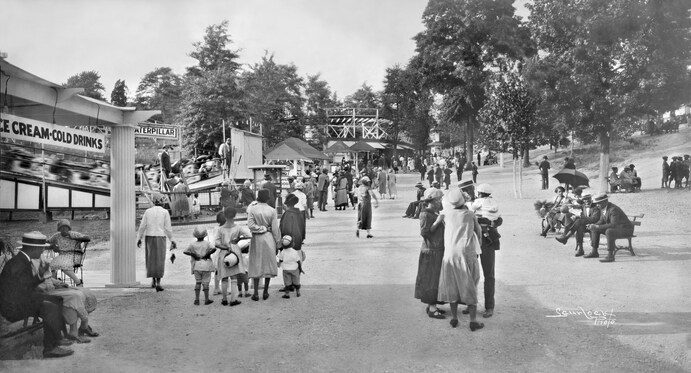
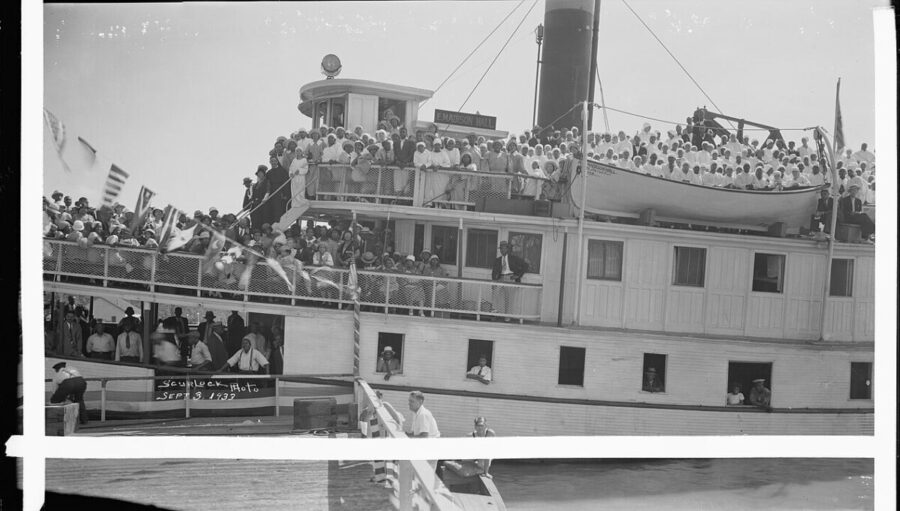 By Scurlock Studio (Washington, D.C.) – Smithsonian Institution, National Museum of American History : Archives Center, Public Domain

The excursion ship E. Madison Hall was owned and operated by a Black man, Captain J. O. Holmes. It was a steamer that was 160 feet long that seated 800 and had 20 staterooms. The excursion season began in May and lasted through September. The ship made two or three trips down the Potomac to River View resort. The exact dates of its launch and end are unknown but the boat was mentioned in a 1917 news article, and in a 1934 article that reported J. O. Holmes’ death and will, where he said that upon his death the boat should be sold. The boat was originally built as a personal yacht for J. P. Morgan and Holmes purchased it.
Florida
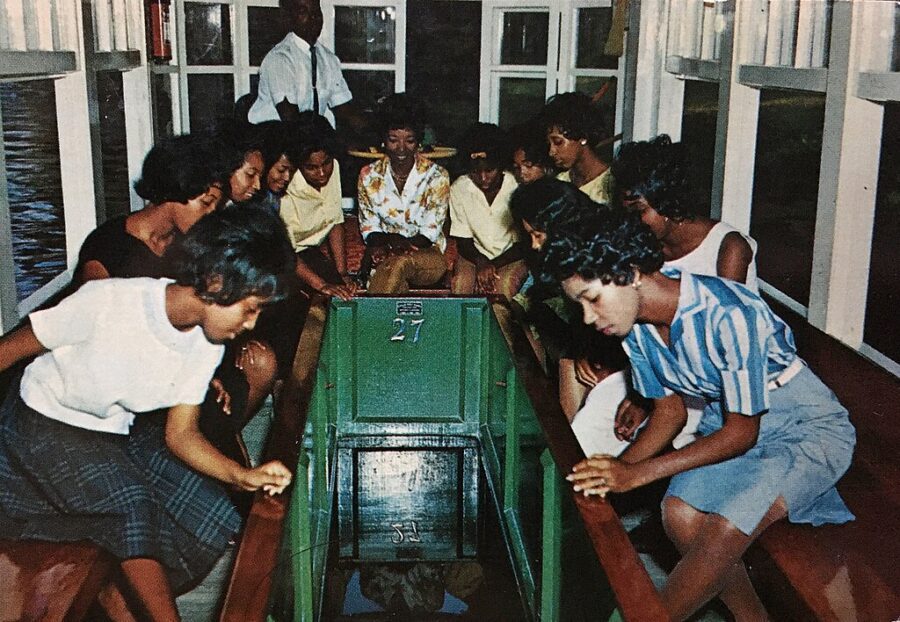
Paradise Park was located in Silver Springs near Ocala, Florida. It operated from 1949 to 1969 and was created as a government alternative to the white beach, where Blacks were excluded. Features included glass-bottom boats, “jungle cruises,” a petting zoo, a dance pavilion with jukebox, performers, a softball field, a horseshoe toss, a reptile exhibit, and a sandy beach with lifeguards. The park operated year-round with activities that included water baptisms, church services for Easter and Christmas, organization conventions, concerts and every year they honored Bethune-Cookman with a day.
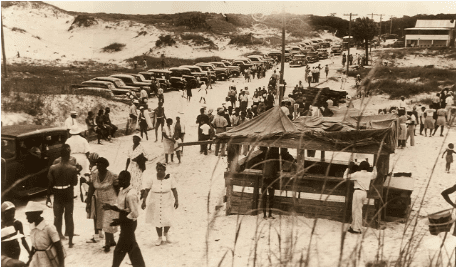
American Beach Resort on Amelia Island outside of Jacksonville, Florida was co-founded in 1935 by Florida’s first black millionaire, Abraham Lincoln Lewis, and his Afro-American Life Insurance Company. It was founded for Lewis’s employees. Lewis was a strong advocate for Black recreation, which also moved him to build Lincoln Golf & Country Club. The beach resort included hotels, restaurants, and nightclubs as well as homes and other businesses. Over time, people invested in the building of their own cottages and houses, where they lived or rented out to tourists.
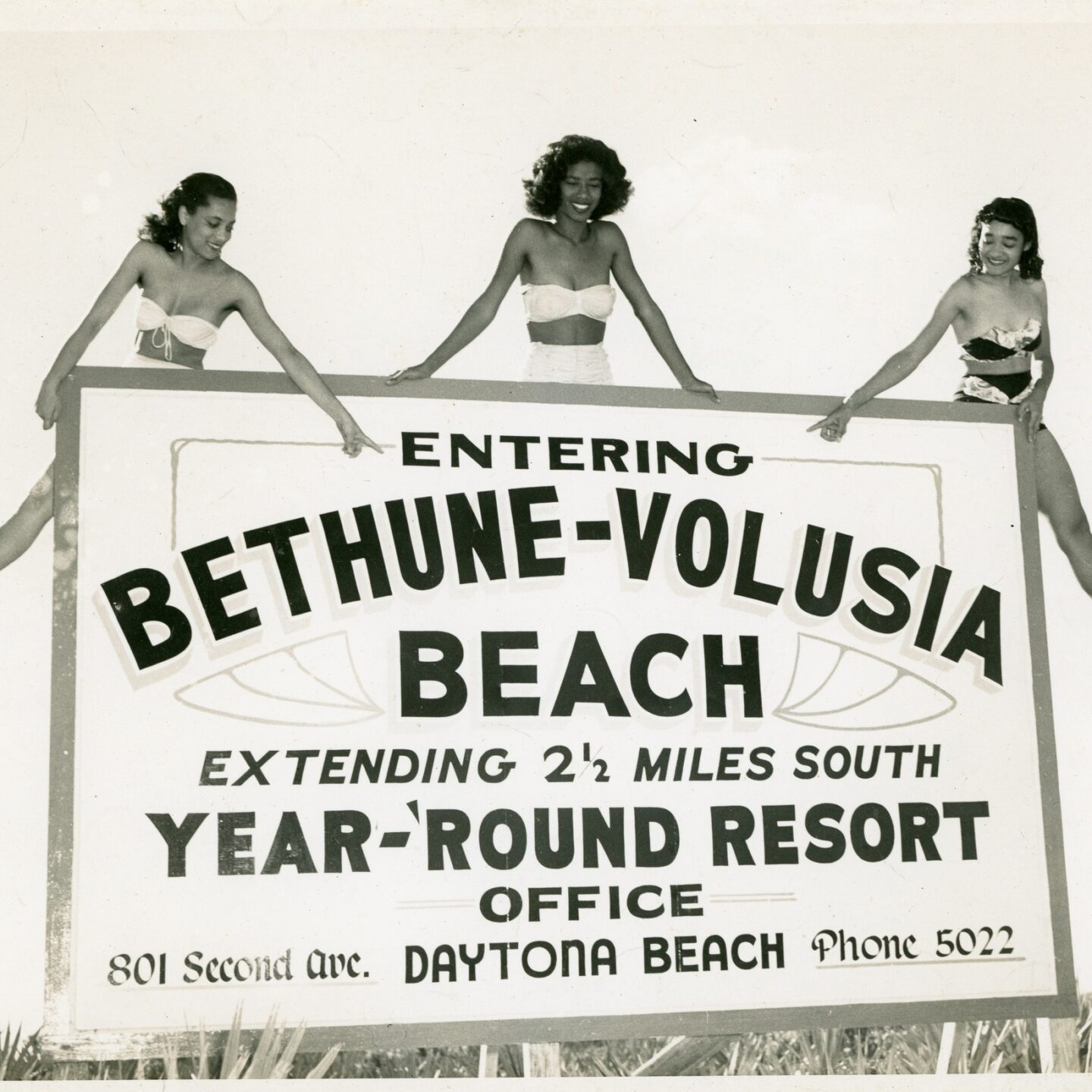
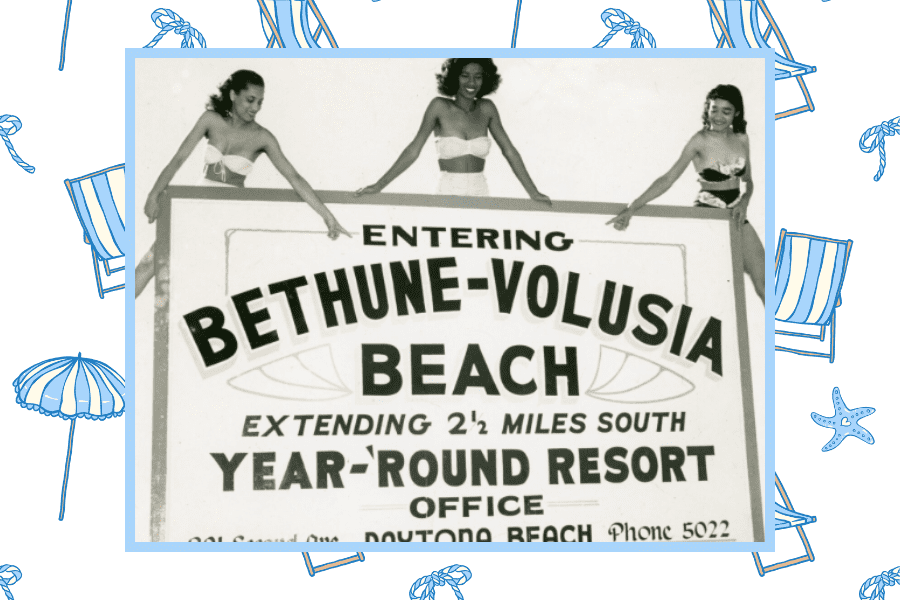
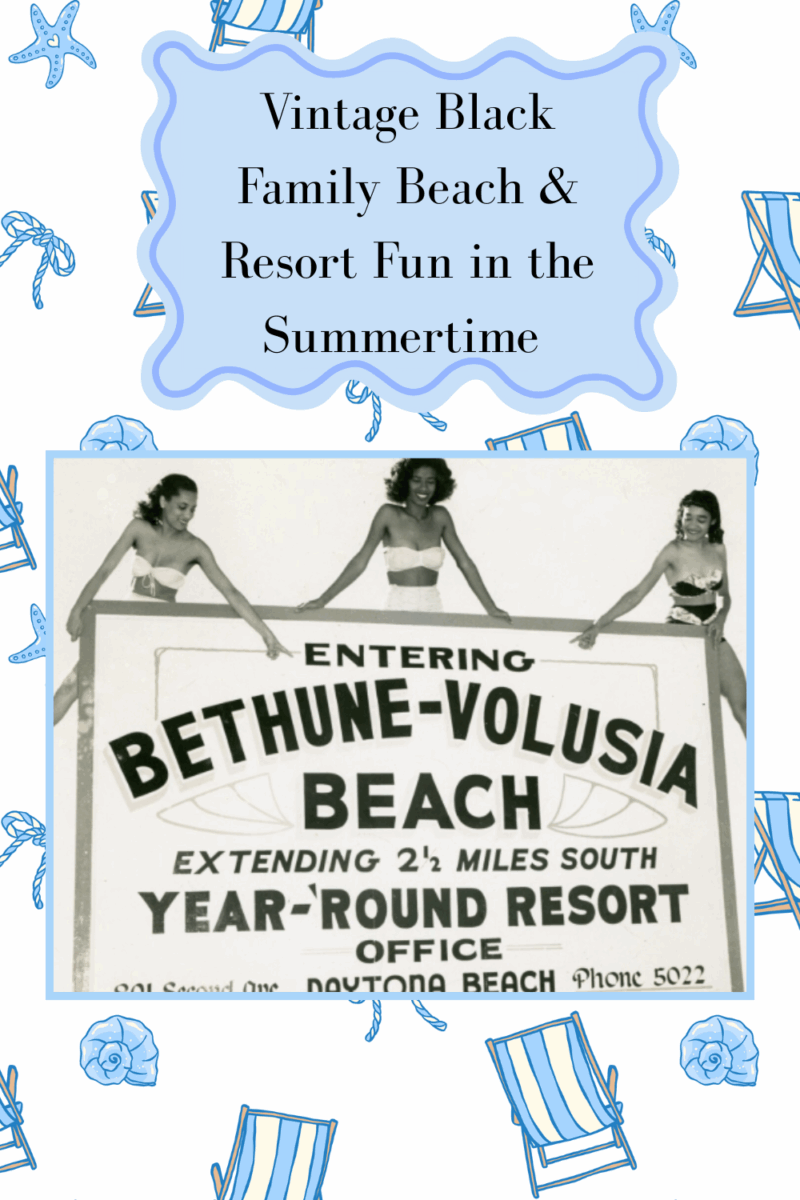
Bethune-Volusia Beach, public domain
Bethune-Volusia Beach was incorporated in 1949 by Daytona’s own Dr. Mary McLeod Bethune and George Engram Sr. as a refuge for Black Daytona residents, including Bethune-Cookman students, that were denied access to white beaches. Dr. Bethune and Engram sold lots for vacation homes, and they sold land to Black restaurant, lodge and other merchants. They co-founded the Welricha Hotel. Dr. Bethune is quoted as saying, “On the Fourth of July, we sat here in this beautiful beach motel, which we have called ‘Welricha,’ facing the waters of the great Atlantic Ocean on the one side and the north arm of the Indian River on the other.” The beach is a historic site, but the homes that are currently inhabited are not owned by Blacks and are in the million-dollar range.
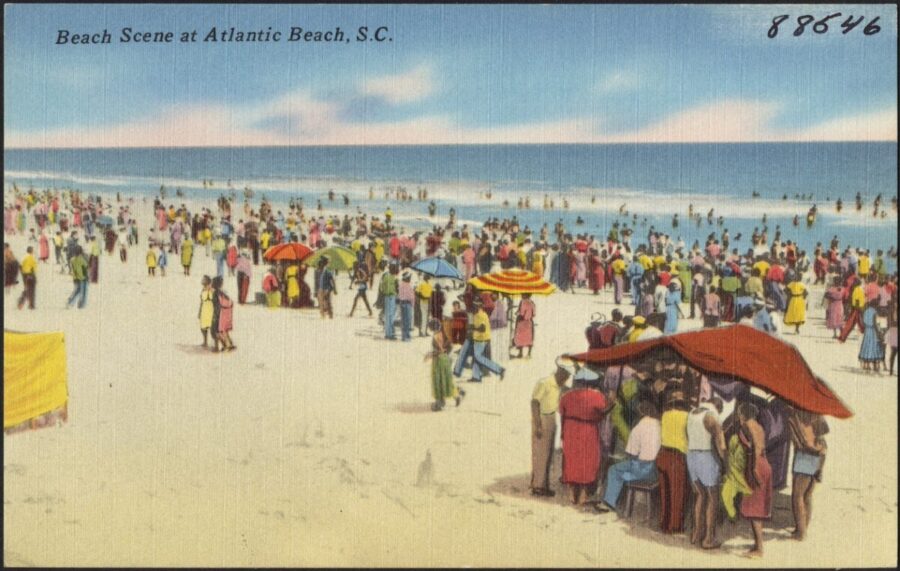
According to BlackPast.org, “The roots of Atlantic Beach stretch back to 1934 when men and women of mostly Gullah/Geechee ancestry, who were the descendants of slaves who had lived along the South Carolina and Georgia coast for three centuries, opened small tourist motels, restaurants, night clubs, and novelty shops in the area. A few of them also chose to live year round in the beachfront community.” Over the span of almost thirty years, Black families owned businesses, cabins and vacation homes on the beach. It was also a stop for Black musicians and entertainers needing lodging and gigs. It was so successful it was dubbed “The Black Pearl.”
There were many other beaches and resorts in the United States that catered to Black families. For example, Chowan Beach, North Carolina, Freeman Beach-Seabreeze, Wilmington, North Carolina, Buckroe Beach, Hampton, Virginia, and West Virginia’s Hill Top House Hotel. African Americans – rich and poor – enjoyed having fun at the beach and they enjoyed it without the concern of being excluded.



Robin Caldwell is the blogger behind freshandfriedhard.com and academic researcher focusing on Black history, heritage and culture. Public historian primarily in Black American historical foodways: antebellum and regional.
